

Wild Science.
Expert insights on biology… with dad jokes.

Shark Tsunamis. Yes, I’m Writing About Shark Tsunamis.
Simon J Pierce
Obviously, the possibility of Shark Tsunamis required my full and immediate attention. Far more important than the annual report I’m supposed to be writing for four months ago, or my inbox, in which the oldest email dates back to December 2017, or… um.

When good birds go bad.
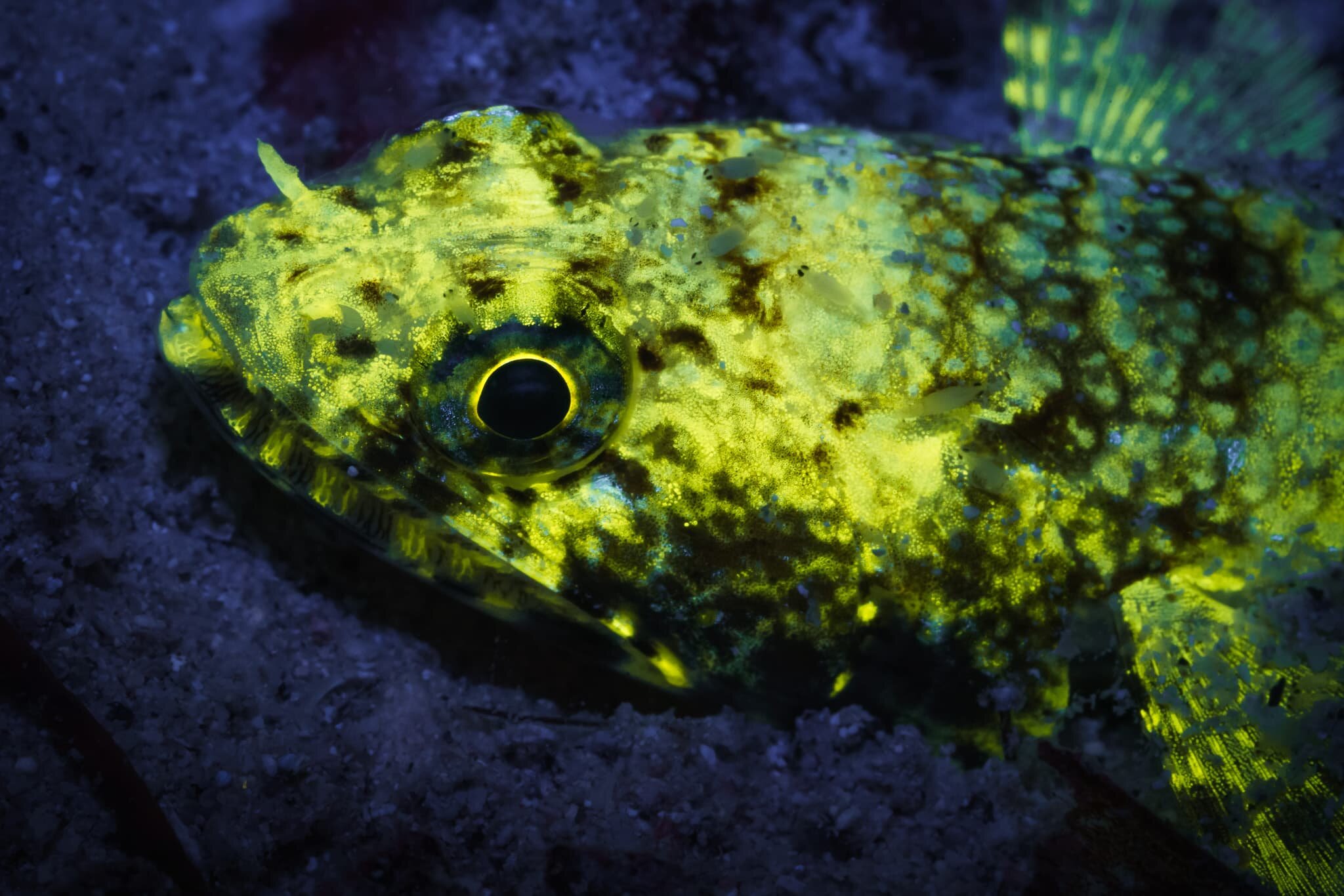
Biofluorescence occurs in over 250 fish species, as well as hard corals, jellyfish, mantis shrimps, sea turtles, and other groups. It’s particularly common in “cryptic” species. Many coral reef fish species have vivid color patterns, like angelfishes. “Cryptics,” such as lizardfishes and scorpionfishes, appear well-camouflaged to our eyes.

Whale watching is a big deal in Kaikoura. You can see whales from a boat, helicopter, or small plane. I’ve done flights with Wings Over Whales a couple of times. They’re absolutely brilliant; it’s how I got the photo above. Chatting before a trip, one of the pilots also mentioned that he’d watched a sperm whale hunt down a blue shark.

Mexico, specifically the area north of Isla Mujeres on the Yucatan Peninsula, is the seasonal home of large numbers of whale sharks over the summer months. It probably offers the world’s most consistent sightings of whale sharks for tourists over the northern hemisphere summer.

Every whale shark is identifiable based on their unique spot pattern. Over 8,000 tourists and researchers have submitted photos to a global sighting database (www.whaleshark.org), identifying over 10,000 individual whale sharks. Most of those have been juvenile males, however. Even the largest feeding areas are home to less than 2,000 sharks – and some popular tourist destinations, such as Tanzania and Honduras, seem to have less than 200.

Frame-by-frame video analysis reveals the sharks’ strategy. They lunge forward, then use their big wide pectoral fins to hit the brakes. This stalls their whole body, allowing them to deliver an overhead tail-slap at measured speeds of over 20 meters per second (45 miles per hour). That’s so fast that the tip of the tail literally causes water to bubble.

A new paper, led by the Large Marine Vertebrates Research Institute Philippines (LAMAVE), with help from the Tubbataha Management Office and myself, has showcased the benefits to sharks that can be achieved by effective marine protected areas (MPAs).

Bored of simply trying to take good photos, with complicated equipment, while lying suspended in thick liquid, within an unbreathable, alien environment? Don’t worry, I have a solution. We’ll do all of the above… at night. Also, let’s add a thick mask filter so you can’t see properly.

So I got this email: Hello! My name is Brianna and I’m from Colorado. I’m going to try to get straight to the point so that I don’t waste your time, Mr. Pierce. A coupe of months ago, I was in my first period Geography class when somehow the girl who sits next to me and I got into a discussion about Shark Tsunamis. Please, don’t close this email I realize how completely dumb this sounds.

My work at Mafia began in 2012. Dr Chris Rohner and I, both from the Marine Megafauna Foundation, won a research contract advertised by WWF Tanzania. Our assigned objectives were to find out what the whale sharks were doing at Mafia, and to identify the factors that influence their abundance.
A 10 cm goldfish, swimming through the water at leisure, leaves a wake that persists for over five minutes. Imagine if a fish-eating animal could detect and track that turbulence. It’d be one unlucky goldfish. Seals, which are basically Jedi, are way ahead of me.