For this Best Full-Face Dive Mask review, the "Best Of" categories more or less go out the window. The full-face mask industry is dominated by two hard-hitting brands, Ocean Reef and Ocean Technology Systems (OTS), and our budget pick, the OTS Spectrum, works with the regulator you already own.
BTW, I've listed all our winners for best dive gear here, that includes my best dive computers, dive masks, dive fins, BCDs, and regulators in 2026.
The Ocean Reef Neptune III is the best full-face dive mask for 2026: Ocean Reef's current model, with a wider view, a smoother-breathing second stage and a one-handed emergency release. If you want to add intercoms, the OTS Guardian has a port ready for them. On a budget, the OTS Spectrum works with the regulator you already own. Clare's advice: track down a full-face mask instructor so you can practise the particular safety skills needed for this type of gear before you head out to sea on your own, since clearing it and switching to a buddy's air both work differently to a standard mask and regulator.
The best full-face dive masks for 2026 are:
Quick comparison: best full-face dive masks for 2026
Read the full guideStart with our pick. If your needs are different, there is a pick for you alongside it.
Our pick
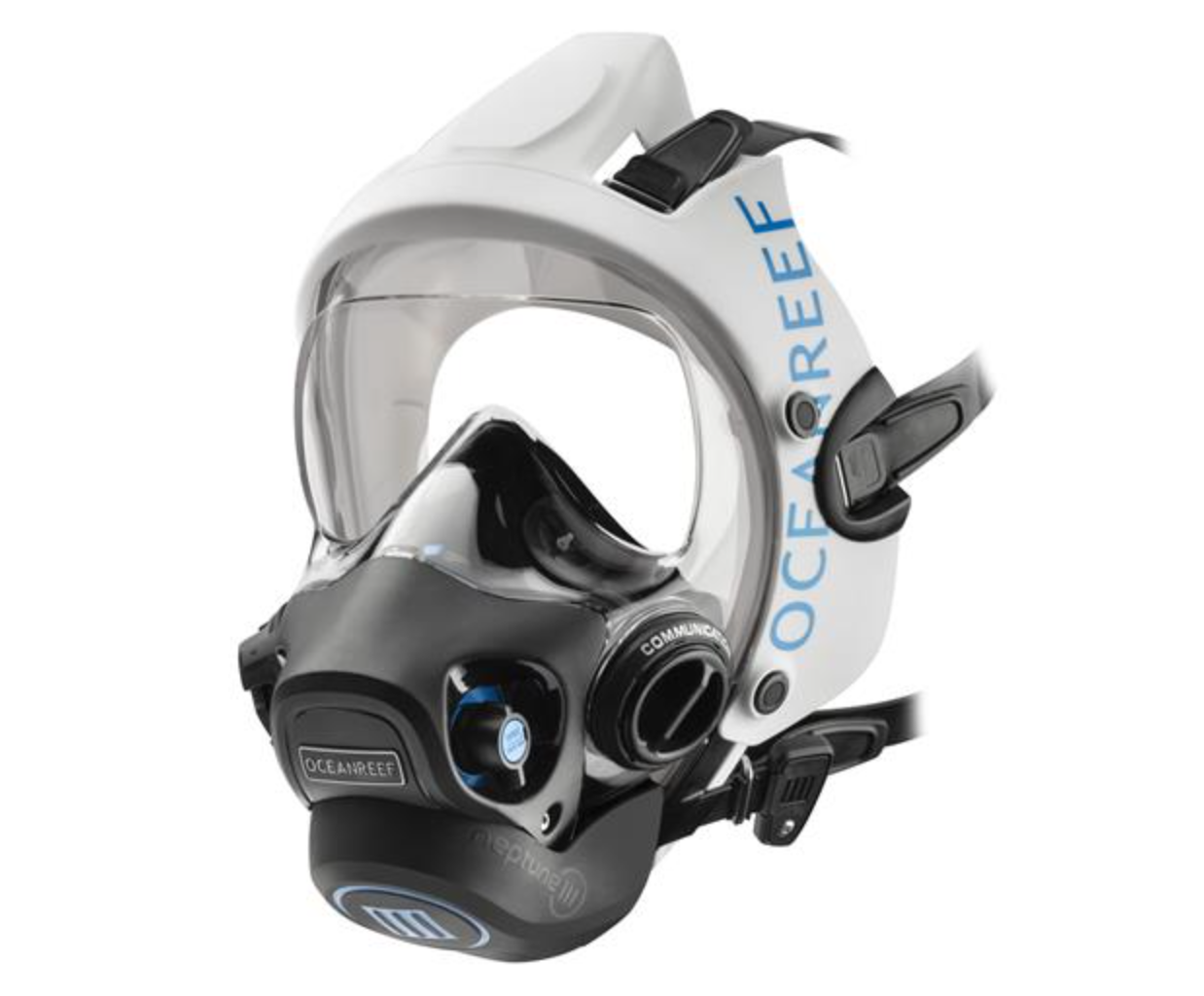
Ocean Reef Neptune III Full-Face Dive Mask
The Neptune III is rugged enough for professional use but still comfortable for recreational divers, with a smoother-breathing second stage and a one-handed emergency release.
Best Full-Face Mask for Adding Comms
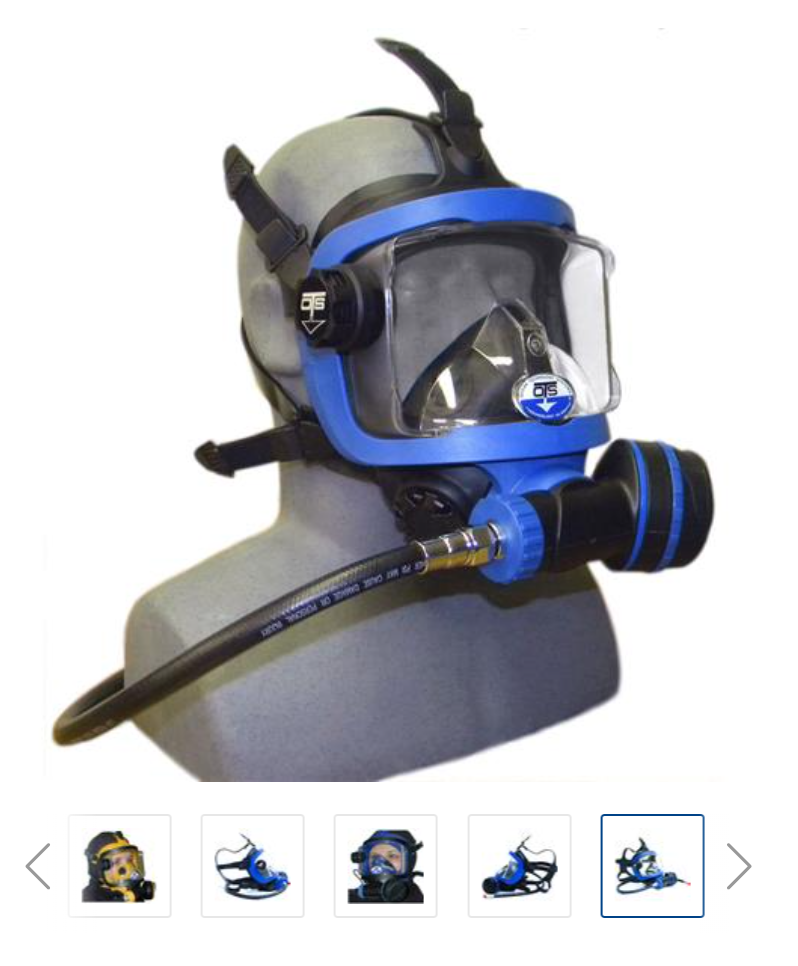
OTS Guardian Full-Face Dive Mask
The OTS Guardian has a port ready for the OTS Buddy comms system, sold separately, and it's compatible with Ocean Reef's system too, so you can still talk to a buddy using the other brand.
Best Budget Full-Face Dive Mask
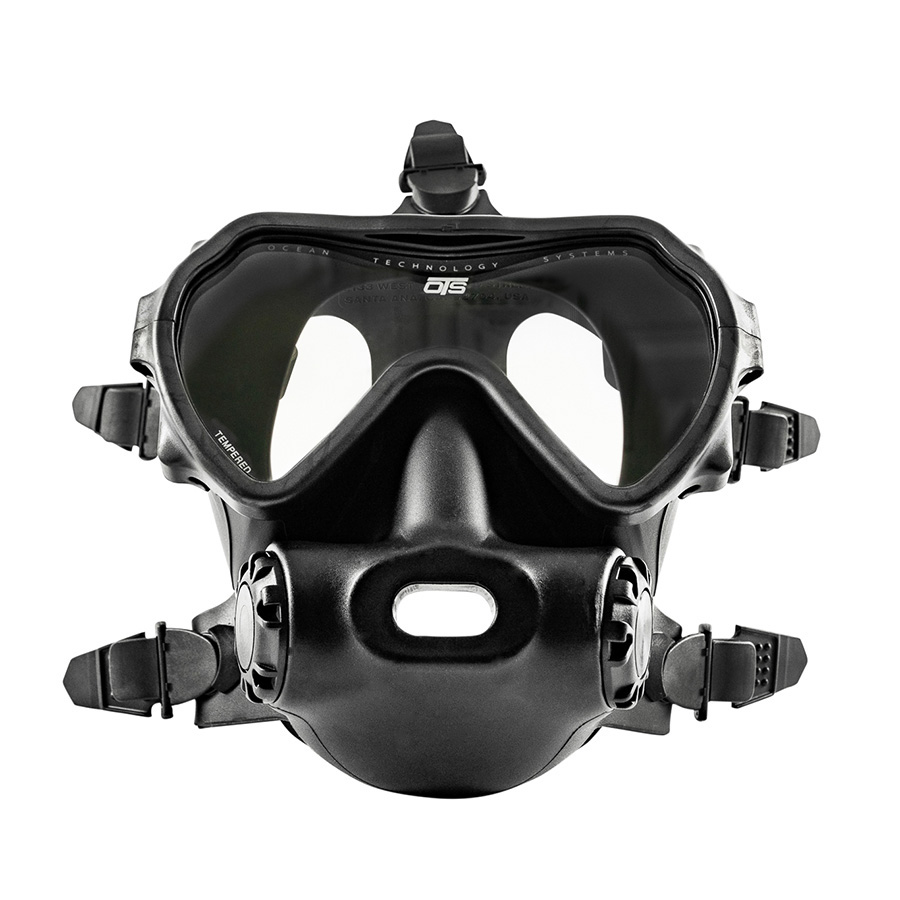
OTS Spectrum Full-Face Dive Mask
The cheapest way into a full-face mask in this guide, because the Spectrum works with the regulator you already own instead of coming with one built in.
Explore this guide 16 sections
- The best full-face dive masks for 2026 are:
- Quick comparison: best full-face dive masks for 2026
- Best full-face dive masks for 2026: the full reviews
- Still not sure? Which full-face dive mask is right for me?
- Buyer’s guide to the best full-face dive mask for 2026
- How I identified the best full-face dive masks
- Do I need (or want?!) a full-face dive mask?
- How do I ensure a good fit for my full-face dive mask?
- How do you equalise in a full-face dive mask, if you can’t pinch your nose?
- How do you switch to your buddy’s alternate if you’re wearing a full-face dive mask?
- What prescription lenses are available for full-face dive masks?
- What lighting options do I have with my full-face dive mask?
- Can you talk to your dive buddy from a full-face dive mask?
- Do I need a surface air valve (ABV) for my full-face dive mask?
- Best full-face dive masks: your questions answered
- Best full-face dive masks for 2026 at a glance
Best full-face dive masks for 2026: the full reviews
Best Overall Full-Face Dive Mask Ocean Reef Neptune III Full-Face Dive Mask
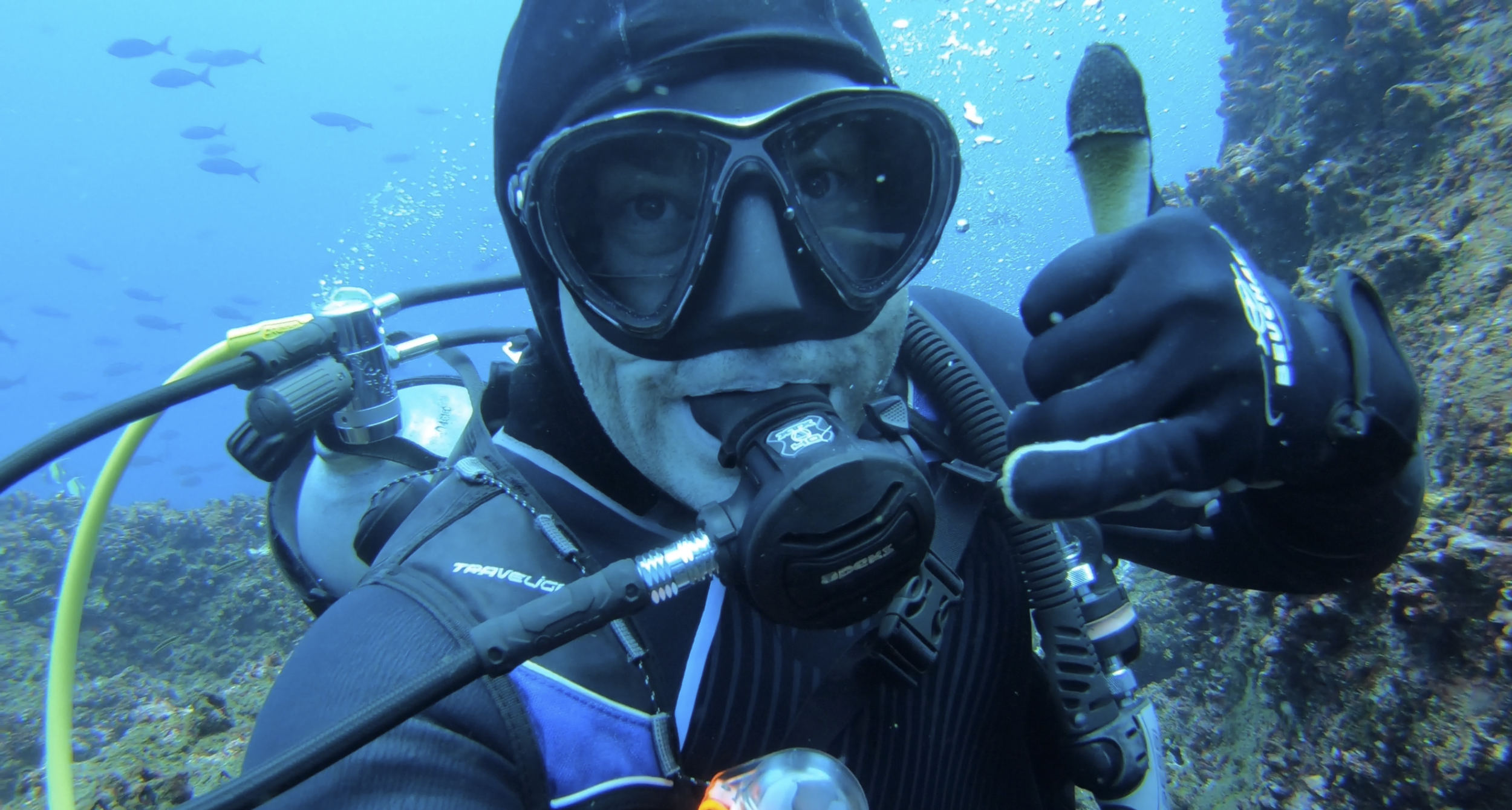
This mask is quite rugged and is designed for professional use, but is also perfect for recreational users. It's one of the best-looking full-face masks on the market (in my opinion) and currently only comes in darth vader (black) and storm trooper (white), so you cannot fail to look "badass" (a word used in their own promo, lol).
The visor has a similar design but now a slightly wider field of view, similar to the other Ocean Reef masks. The second stage also has a slightly different design, which makes for a smoother breathing experience. The silicone skirt inside the mask is the same as their other masks, meaning they're all interchangeable, and you can swap the size of the skirt to fit your face easily. Same goes for the straps. There's also now a handle that connects the two emergency release tabs, meaning you can take your mask off very quickly with one hand rather than needing two like before. There are also a few niche pros to this mask, like the tuning of the exhaust to control free-flow when inverted; the placement and direction of the exhaust means you get very little interference from your bubbles. And the second stage is now on the outside of the mask, which means it can be easily serviced. Perhaps most importantly, it's not that much more expensive than earlier iterations of Ocean Reef masks, even though it looks cooler.
This mask can be ordered alone, but it comes with all the bells and whistles if you order the full "Neptune Package". The package includes a quick-release hose, a pressure gauge (both PSI and Bar are marked), a travel bag, a first stage (DIN or Yoke) and a second stage octopus, a quick-release handle, a backup mask and bag, a rolled-up snorkel, and a kit-up mat, to keep your feet from getting dirty, and it ties up as a wet gear bag after your dive. Nifty.
The travel bag comes with lots of storage, it's a Tardis (Dr Who reference there for those that missed it) and can even be used as a carry-on bag if required. The regulator set is fairly decent and the quick-release hose for both the primary and alternate is more than sufficient for recreational use and easy to use if either you or your buddy are low on air. This mask comes with the Ocean Reef extender frame (mentioned earlier) fitted to this mask so you can immediately make after-purchase modifications to personalise your mask.
Other features:
- Wider field of view than earlier Ocean Reef masks
- Interchangeable silicone skirt and straps, shared across the Ocean Reef range
- One handle connecting both emergency release tabs, so the mask comes off with one hand
- Tuned, directable exhaust to cut bubble interference if you go inverted
- Second stage on the outside of the mask, for easier servicing
- Ocean Reef's extender frame fitted as standard, ready for cameras, lights or comms
Cons: basically, only experienced tech divers will find very nit-picky personal issues with this mask, such as the reduced ridges on the dials, which makes it slightly harder to turn them with gloves on, and the slight placement differences of the purge valve and release hose, which means you have to think about it a little if you're used to previous Ocean Reef masks. But this shouldn't take too long to get used to.
Skip it if budget matters more than having the newest Ocean Reef tech. It's priced well above the rest of this lineup.
Also consider OTS Guardian
Best Full-Face Mask for Adding Comms OTS Guardian Full-Face Dive Mask
The original purpose of this mask was for more commercial and professional divers. The square-shaped visor gives the mask a much more techy look: think darth vader, where the Ocean Reef is more Bane from Batman. This mask has a port ready for the OTS Buddy comms system, which is sold separately, and it's compatible with the Ocean Reef system so you can talk to divers on other systems. The equalising system is more of a nose "triangle", which some people find more comfortable than the Ocean Reef double nose pieces. They do have different sizes of the nose triangle to accommodate different sized noses, so you can equalise easily. There's a button on the inside of the mask that releases the primary second stage from the mask; this is useful for pros who service their own masks, but it's also good for easy storage. The gel-like texture of the silicone on the skirt makes a particularly comfortable and good seal around your face.
Other features:
- Port ready for the OTS Buddy comms system (sold separately), compatible with Ocean Reef's system
- Nose "triangle" equalising system in a few sizes
- Button-release primary second stage for servicing or storage
- Gel-textured silicone skirt
Cons: the side panels on the mask are frosted, which reduces the 180 vision a little, though you won't be focussed on this too much, so maybe not a deal breaker. The purge button is on the side of the mask, not the centre like with a standard regulator, which can take some getting used to if you're switching from a normal mask and reg system. The oral/nasal skirt and main skirt are the same piece of silicone, so you have to replace the whole seal if any of it tears, which can be annoying and more expensive. You can do adhesive mounts to attach cameras etc, but it doesn't quite have the space like the Ocean Reef extender system. Two old recalls covered Guardians sold in 2009 and late 2010, not masks sold since, and both were fixed: about 900 sold from March to August 2009 (CPSC 10-006), whose visor could dislodge under pressure, got stainless steel visor clamps, and about 1,700 sold from September to November 2010 (CPSC 11-180), whose purge assembly could come off the regulator and cut off the diver's air, were tested and repaired free.
Also consider Ocean Reef Neptune III
Best Budget Full-Face Dive Mask OTS Spectrum Full-Face Dive Mask
The Spectrum is OTS's budget route into a full-face mask: instead of a built-in regulator, it takes the second stage you already own, so there's no mouthpiece to bite on, no jaw fatigue, and you can breathe through your nose as well as your mouth.
It's a Testers Choice pick from 2023 industry testing, praised for a dry, comfortable seal even on smaller faces and a soft nose pocket that makes equalising easy. An internal frame holds add-ons, so you can fit OTS comms or a surface air valve later if you want them, and OTS rates the mask to 50 m under the European EN 250 standard.
Other features:
- Takes your own second stage, so there's no built-in regulator to pay for
- Internal accessory frame for comms or a surface air valve
- Rated to 50 m under EN 250:2014
- Four colour and lens combinations
Downsides? The price is for the mask only: you'll need your own regulator, set up to fit it. Amazon owners love having no mouthpiece, but one detailed review found the black skirt and the distance between lens and face cut side vision down to a dark tunnel, and one owner reported using a little more air. Owner reports also note the soft skirt is fiddly to seat quickly, that it sucks in and out under hard breathing, and that it needs defog since there's no built-in regulator; there's no purge valve to drain water either, just a pull tab on the skirt, which one owner broke off while adjusting it.
Skip it if you don't already own a regulator you're happy with.
Also consider OTS Guardian
Still not sure? Which full-face dive mask is right for me?
- Not sure, want the safe choiceOcean Reef Neptune III Full-Face Dive Mask
- Want to add intercomsOTS Guardian Full-Face Dive Mask
- Want to add cameras, lights or extra kitOcean Reef Neptune III Full-Face Dive Mask
- On a budget and already own a regulatorOTS Spectrum Full-Face Dive Mask
Why you can trust this guide
Dr Clare Prebble is a marine biologist who dives, snorkels, and freedives for a living. She is a Senior Scientist at the Marine Megafauna Foundation, where she is part of the global whale shark research and conservation team, and has a PADI Divemaster qualification. She is also an underwater photographer, and has done thousands of dives across the world. Her research, opinions, and photography have been featured in major media outlets, including National Geographic, The Guardian, and Travel Africa. Clare has done over 1000 dives so far in a range of conditions for research and recreation, including research dives in heavy currents to study whale sharks in the Galapagos Islands, quarry diving in the UK, macro photography muck diving in Tulamben, Indonesia, and liveaboard diving in Komodo National Park. She lives and dives most regularly in Mozambique.
Clare’s frequent travel to remote locations, and her pioneering scientific fieldwork, gives her gear a thorough test on a regular basis. That provides her with a lot of practical experience in the benefits and drawbacks of various dive and snorkel gear features and innovations. She is not sponsored by any dive gear manufacturer, isn’t incentivised to promote any particular brand, and uses a variety of gear herself. Expect her opinions to be delivered dry, pointed, and unvarnished, and generally in a rather sarcastic tone.
With additional commentary from…
Simon Pierce is a shark conservation biologist and underwater photographer with well over 2000 dives in all sorts of conditions around the world. Simon is a co-founder and Principal Scientist at the Marine Megafauna Foundation, where he leads the global whale shark research and conservation program. His marine research and photography are routinely covered by major media outlets, including the BBC, National Geographic, Discovery Channel, and New York Times amongst many others. One of his photographs was chosen as a personal favourite of Sir David Attenborough’s, in conjunction with BBC’s Blue Planet II series, and another illustrates one of the global PADI scuba diving certification cards.
As seen in:

Buyer’s guide to the best full-face dive mask for 2026
Here’s how we identified our picks, and what to know before you buy one.
How I identified the best full-face dive masks
- My own practical experience over 1,000 dives (and discussions with Simon and Mads).
- Various online reviews of dive gear to help create shortlists.
- Buyer comments and reviews on shortlisted gear to broaden the sample size, and particularly to search for evidence of equipment failure.
- Dive professional and other marine biologists’ opinions on my top picks, who use and destroy a lot of gear themselves, as well as hearing their customers’ and colleagues’ views.
Do I need (or want?!) a full-face dive mask?
Well, the main decision you have to make is do you want to talk to people on a dive? You can immediately see the benefit to divers who are, say, on a search and rescue mission or a production film crew, but what about a lovely relaxing dive on your holiday? If you want my opinion (which you bizarrely must do, because you’re reading this!), my initial thoughts were… mixed.
One of the things I love about diving is the blissful silence. Well, except for the adorable background crackling and crunching noises of the reef. As an introvert, I very much enjoy the “not talking.” Having said this, I am also that person on a dive who cannot, ever, spot the macro critters my dive guide points out to me. After three or four times of this person animatedly pointing at a patch of reef, I will still have no idea what they are pointing at or where I’m even supposed to be looking. I am also reliably looking in the opposite direction when something as big as a humpback whale swims by.
So here is where the appeal lies for me…
Benefits of a full-face dive mask
- As well as your dive buddies, you can also talk to the surface boat and anyone else who is tuned into your channel.
- You are less likely to lose your full-face mask than a regular mask and regulator, as the regulator is integrated and the whole thing has multiple independent straps keeping it on your face.
- You get a larger field of vision than a traditional mask. Better for taking in the reefscape!
- As you are breathing new air over the mask consistently, the masks generally don’t fog up either, which can be a pain with normal dive masks.
- For cold water or muck divers, the mask keeps your face isolated from the water so you don’t turn into a popsicle and lose the ability to move your face afterwards.
Drawbacks of a full-face dive mask
- While the full-face mask is harder to lose, if you do, it’s harder to clear (large volume inside), and trickier to replace on your face (you’ve lost your reg and your mask, awks, and you have a lot of straps to deal with). You do have your other octopus to help you if you need it though, and this is where some initial skills training with your new mask style is strongly suggested.
- Do track down a full-face mask instructor so you can practice the particular safety skills needed for this type of gear before you head out to sea on your own.
- There’s a PADI speciality for it, so no excuses, safety first! For practical travel purposes, the full-face mask will obviously be heavier and take up more space in your luggage than a standard mask.
How do I ensure a good fit for my full-face dive mask?
As in our dive mask guide, you should take the time to get the mask that fits you and suits you best. Each manufacturer and model will have different shapes and features. The initial outlay will be considerably more than a regular mask, so it’s all the more important to try before you buy, if you can (because pandemic, mournful sigh).
How do you equalise in a full-face dive mask, if you can’t pinch your nose?
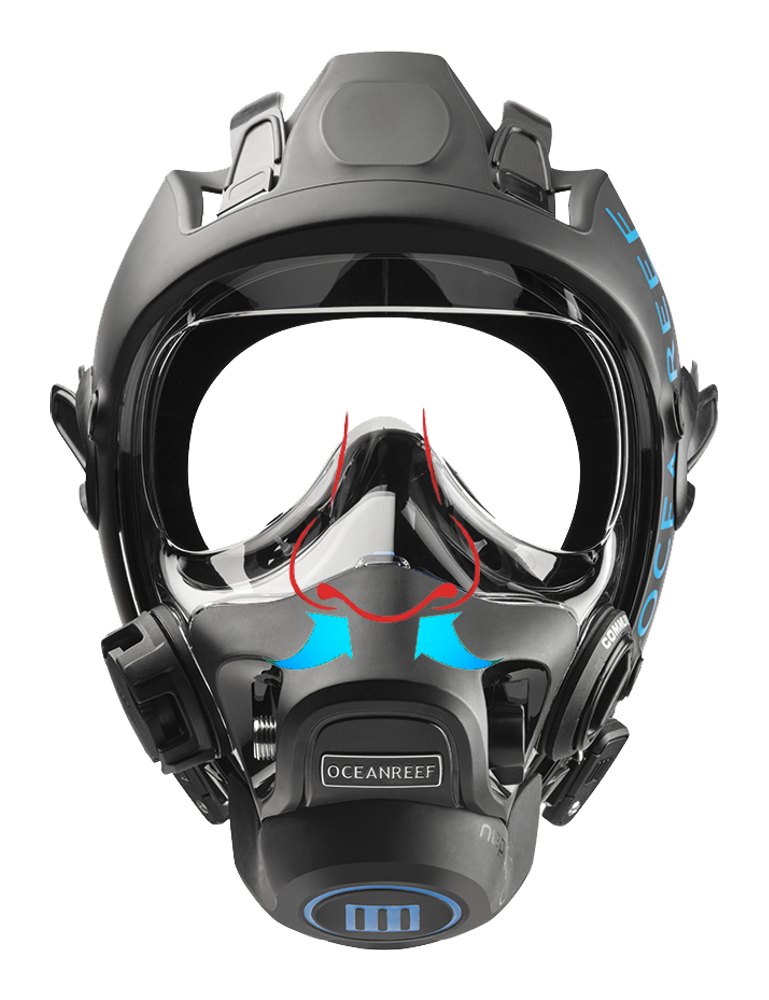
In each full-face dive mask, you get an integrated nose piece or pieces. These are usually somewhat adjustable depending on the model of the mask. To equalise underwater, you push the top of your mask, which causes the nose piece(s) to seal your nose, then you can equalise.
How do you switch to your buddy’s alternate if you’re wearing a full-face dive mask?
You signal out of air to your buddy (as normal), then you have to take your face mask off. There are usually two quick-release straps integrated into your mask for this purpose. Then you take your buddy’s alternate from them. Some already do, but I would suggest keeping a spare mask in your BCD just in case, so you can then put your spare mask on (and clear it) at this point. There is also the option that you dive with a buddy who has the compatible attachment to your face mask, so you can avoid taking off your mask and just re-attach their secondary hose to your mask.
This is why you need to get certified!
What prescription lenses are available for full-face dive masks?
Ocean Reef makes an optical lens support that fits directly into any Ocean Reef full-face mask, allowing you to add prescription lenses. You just take the support (lens frame) to your optician, get your prescription, and then install it into your mask.
Video: Ocean Reef Optical Lens Support
What lighting options do I have with my full-face dive mask?
You have the option to add lights or torches to your mask. You can see the appeal, since it means you can illuminate a cave or overhang or generally low-light areas while your hands are left free to do other things. This feature may also be useful for underwater photographers, as focus lights in low-light areas. Depending on the brand of mask you have, you can get strip lights that fit into your visor, more torch-like lights that protrude out the side of the mask, or you can even buy your own torches and custom fit them to your mask. Do make sure you have the additional rails and extenders on your mask if you opt for the basic mask models, as these usually don’t have any attachment points for this function.
Ocean Reef sells a visor light pre-assembled on Neptune masks, and OTS sells an accessory rail light system for its masks.
Can you talk to your dive buddy from a full-face dive mask?
In general, you can opt for underwater communication devices and/or surface communication devices, depending on your needs. Comms devices are sold by the same brand you got your mask from, and are usually sold as an add-on package with everything you need (microphone, receiver, wires, and so on). Most masks above the most basic models have a port on the mask specifically for fitting comms devices.
Both Ocean Reef and OTS sell their own comms packages for their masks.
Do I need a surface air valve (ABV) for my full-face dive mask?
Surface air valves let you breathe ambient air at the surface. Most masks that are one step up from the most basic model already come with a surface air release valve installed. But if you go for an entry-level option initially, no bells and whistles, and later find you need to save your air at the surface, they’re easy to buy and have installed. An ABV is also usually flagged as an “add-on” option if you’re buying a model that doesn’t include one as standard.
Nature Tripper also has guides like this one for dive masks, dive computers, dive fins, BCDs and regulators, as well as an overall guide to the best dive gear.
Best full-face dive masks: your questions answered
Do I need a full face scuba mask instead of a standard mask and regulator?
The main decision is whether you want to talk to people on a dive. You can also talk to the surface boat and anyone else tuned into your channel, you're less likely to lose the mask since the regulator is integrated, and you get a bigger field of vision. As you're breathing fresh air across it, the mask generally won't fog either, and it keeps your face warmer in cold water or muck diving.
How do I get a good fit for a full-face dive mask?
Take the time to get a mask that fits you and suits you best. Each manufacturer and model has different shapes and features, and the initial cost is considerably more than a regular mask, so it's worth trying one on before you buy if you can.
How do you equalise in a full-face mask if you can't pinch your nose?
Every full-face mask has an integrated nose piece, usually adjustable depending on the model. To equalise underwater, you push the top of the mask, which seals the nose piece, then equalise as normal.
How do you switch to your buddy's alternate air source in a full-face mask?
Signal out of air to your buddy as normal, then take off your face mask using the quick-release straps built into most masks, and take your buddy's alternate from them. It's worth keeping a spare mask in your BCD so you can put it on and clear it once you're on their air. Some full-face masks can also attach directly to a compatible buddy's secondary hose, so you don't need to take your mask off at all. This is exactly why you need to get certified on this gear before you dive it.
What prescription lens options are there for a full-face dive mask?
Ocean Reef has an optical lens support that fits into any Ocean Reef full face mask and takes a prescription lens. Take the support to your optician, get your prescription fitted, then install it in your mask yourself.
Do I need a surface air valve on a full-face dive mask?
A surface air valve lets you breathe ambient air at the surface instead of using your tank. Most masks above entry-level already have one fitted; if you buy a basic model without one, it's easy to add later.
The bottom line
Get the Ocean Reef Neptune III
Ocean Reef's current full-face mask, with its extender frame for cameras and lights already fitted. If you want to add comms, the OTS Guardian is the alternative, and the OTS Spectrum is the budget route if you already own a regulator.
Best full-face dive masks for 2026 at a glance
Every pick in one table. Swipe sideways on a phone.
| Pick | Best for | Price | Watch out for |
|---|---|---|---|
| Ocean Reef Neptune III | Best Overall Full-Face Dive Mask | $$$ | Only experienced tech divers are likely to notice the nit-picks: slightly less grip on the dial ridges with… |
| OTS Guardian | Best Full-Face Mask for Adding Comms | The frosted side panels reduce your 180-degree vision a little, the purge button sits on the side rather… | |
| OTS Spectrum | Best Budget Full-Face Dive Mask | $ | The price is for the mask only: you need your own regulator, set up to fit it. Amazon owners love having no… |
Last updated on